

The short answer: fix the failed layer, not only the low pavers
A small, stable depression in an otherwise sound Surrey, Langley, or White Rock patio can often be lifted and relaid. A widening low area, recurring pond, spreading joints, loose edge, or settlement beside a trench usually points deeper—to lost bedding, weak or saturated base, moving subgrade, failed restraint, or an unresolved water source. Resetting the surface without correcting that cause is cosmetic work, not a durable repair.
- Local repair may fit: movement is bounded, surrounding grades are stable, water has a safe route, and the exposed base remains firm.
- Broader rebuilding is more honest: settlement crosses a large field, follows a utility trench, returns after prior repairs, or sits over wet or contaminated base.
- Escalate first: movement affects steps, a retaining edge, the house, a drain, a vehicle area, or a location with unknown buried services.
Interlocking pavers are a flexible pavement system. The visible units, joint sand, bedding, compacted aggregate, soil below, edge restraints, and drainage all work together. That is useful because individual pavers can be removed and reused, but it also means a flat-looking patch can fail again when the supporting system is still moving. The right first question is not “How much sand belongs under this stone?” It is “Which layer moved, and why?”
Map the settlement before lifting anything
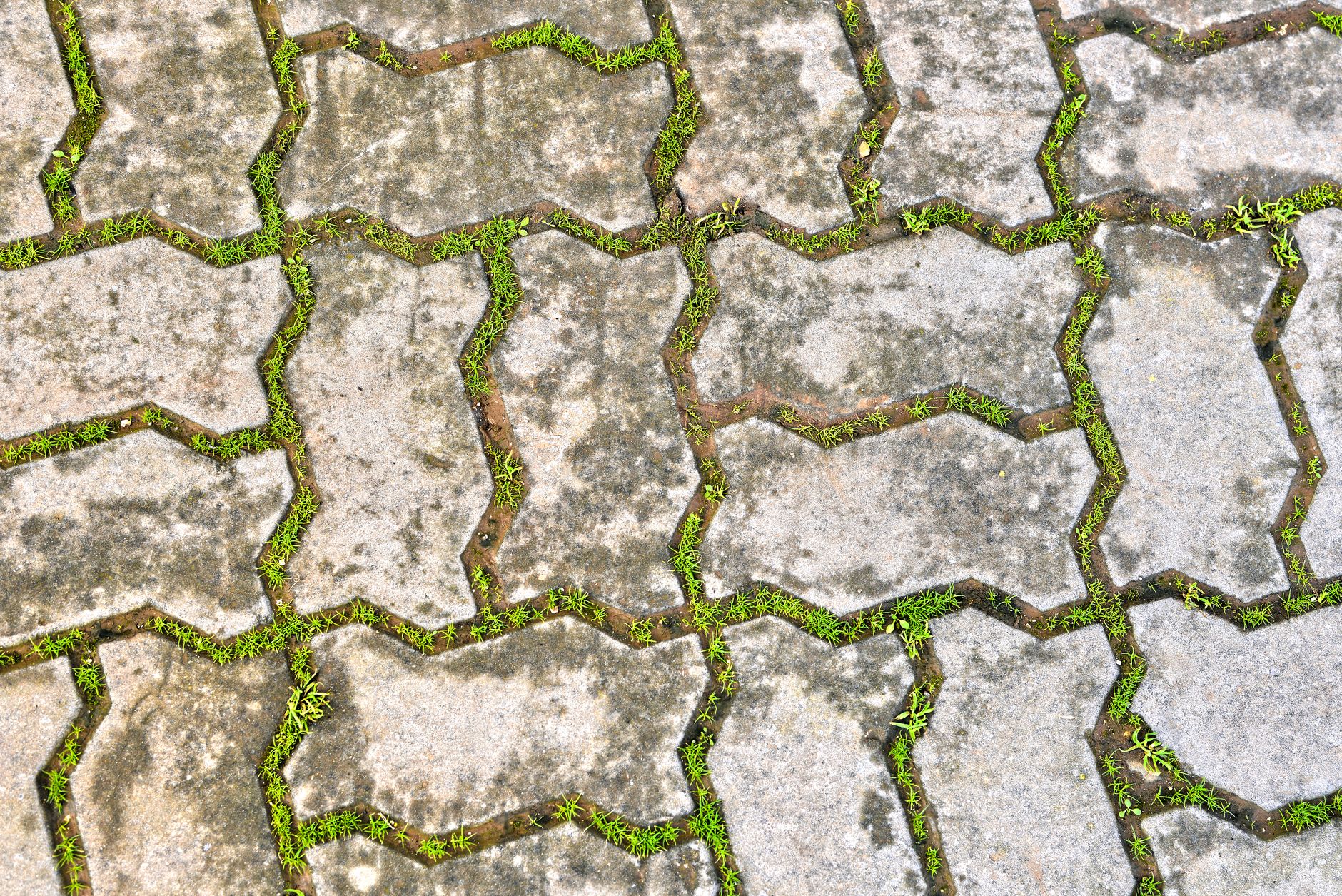
Inspect the patio dry and again during or just after steady rain. Mark the edge of every low area with removable chalk, note rocking units and opening joints, and lay a straight board across the surface to reveal the shape of movement. Photograph the same reference points. A round depression may indicate a localized support void; a long narrow trough can follow a service trench; movement parallel to an outside edge may implicate restraint or base width.
Compare the defect with downspouts, hose outlets, roof drip lines, gates, hot-tub or vehicle loads, tree roots, drains, and places where other work crossed the patio. Do not assume every uneven surface is active settlement. Manufacturing texture, intentional drainage falls, and small historic variations differ from a low spot that is visibly growing or retaining water.
Record now
- the outline and deepest point;
- which units rock under foot;
- joint widths and missing sand;
- whether the area changes after rain.
Protect immediately
- an abrupt trip edge;
- a loose step or landing;
- water directed toward a building;
- movement beside a retaining condition.
Trace where the water arrives and where it can leave

Lower Mainland rain makes drainage defects easier to see. Watch runoff from roofs, lawn, slopes, neighbouring surfaces, and adjoining concrete. Then find the intended outlet. Water that repeatedly enters the base but cannot drain can soften weak soil, move fine material, or keep aggregate too wet to perform as intended. CMHA guidance treats surface grade and subsurface drainage as part of the pavement design, not an accessory added after settlement appears.
A low spot should not be repaired by simply raising pavers until runoff is redirected toward the house, a neighbour, or an unsafe walkway. Likewise, cutting in a drain without a verified outlet is not a complete plan. Where runoff, a buried drain, municipal connection, property line, or foundation is involved, the route and approvals need project-specific review. The broader yard-drainage checklist can help document surface clues, but a patio assembly requires its own construction assessment.
- Surface clue: standing water appears only because the finished grade has sagged.
- Source clue: a downspout, slope, irrigation leak, or hard surface concentrates water at the defect.
- Outlet clue: water enters the pavement edge or bedding but has no dependable exit.
Check edges, joints, loads, and previous excavation

CMHA identifies edge restraints as essential to interlock. When an edge loosens, pavers can creep outward, joints open, bedding escapes, and the surface begins to roll down near the perimeter. Look for missing spikes, cracked or displaced curb, erosion where lawn meets base, and cuts made for irrigation or other work. An edge failure can be local, but the repair must reconnect to sound restraint and supported base.
Now compare loads with the original use. A pedestrian patio, driveway, equipment route, and hot-tub platform do not ask the same thing from the base. Never treat a patio repair detail as automatic approval for vehicle or concentrated structural loads. Also ask whether a gas, electrical, drainage, irrigation, or communication trench was backfilled through the area. Before any excavation, use BC 1 Call and follow the locate instructions; a visible paver pattern does not reveal what is buried below.
- joints opening in a line toward an unrestrained edge;
- settlement tracking a known trench or former stump;
- movement beside a drain, utility box, step, or concrete collar;
- loads that differ from the surface’s intended use.
Lift a controlled sample and read the layers

Once utilities, access, and safety are addressed, a controlled opening can separate a surface issue from deeper movement. Number or photograph the laying pattern, start beyond the visibly failed edge, and remove enough units to expose both the low area and apparently sound pavement. Protect reusable pavers from chipping and keep different colours or batches organized.
Read the assembly rather than hunting for one magic material. Is the bedding uniformly thin, or has it been used as deep fill? Has it washed into an open edge or utility gap? Is the aggregate firm and well graded, or loose, contaminated with soil, and wet? Does the base itself hold the same depression seen at the surface? CMHA specifically warns against using bedding sand to fill depressions in the base because that unevenness eventually reflects through the finished pavement.
Bounded defect
- sound pavement surrounds it;
- base remains dense and stable;
- water source is identified and correctable;
- edge restraint can tie into sound work.
Systemic defect
- soft or pumping base continues outward;
- soil has migrated into aggregate;
- multiple prior patches have settled;
- grade or drainage is wrong across the field.
Choose a local repair only when the base proves sound

A local lift-and-relay repair is defensible when the defect has clear limits and the exposed base outside it remains firm, properly supported, and capable of draining. Remove compromised bedding, correct the small base defect with compatible aggregate in compactable lifts, restore the designed grade, and screed a consistent bedding layer. The exact material, thickness, and compaction method depend on the existing assembly, soil, use, and equipment; they should not be guessed from a generic internet recipe.
Extend the opening far enough to blend the repaired elevation into stable work. A tiny patch with a steep transition simply relocates the trip edge. Rebuild or reconnect failed restraint, preserve safe transitions at doors and drains, and avoid burying inspection points. Atkinson’s patio and walkway page describes the paver, slab, access, excavation, and base variables that affect project scope, while the diagnosis here determines whether those variables apply to one area or the whole patio.
- correct the water source before closing the surface;
- compact the support rather than tamping loose fill through the joints;
- keep bedding consistently thin instead of making it the structural repair;
- match finished grade to safe drainage and adjoining elevations.
Rebuild the affected field when movement is widespread
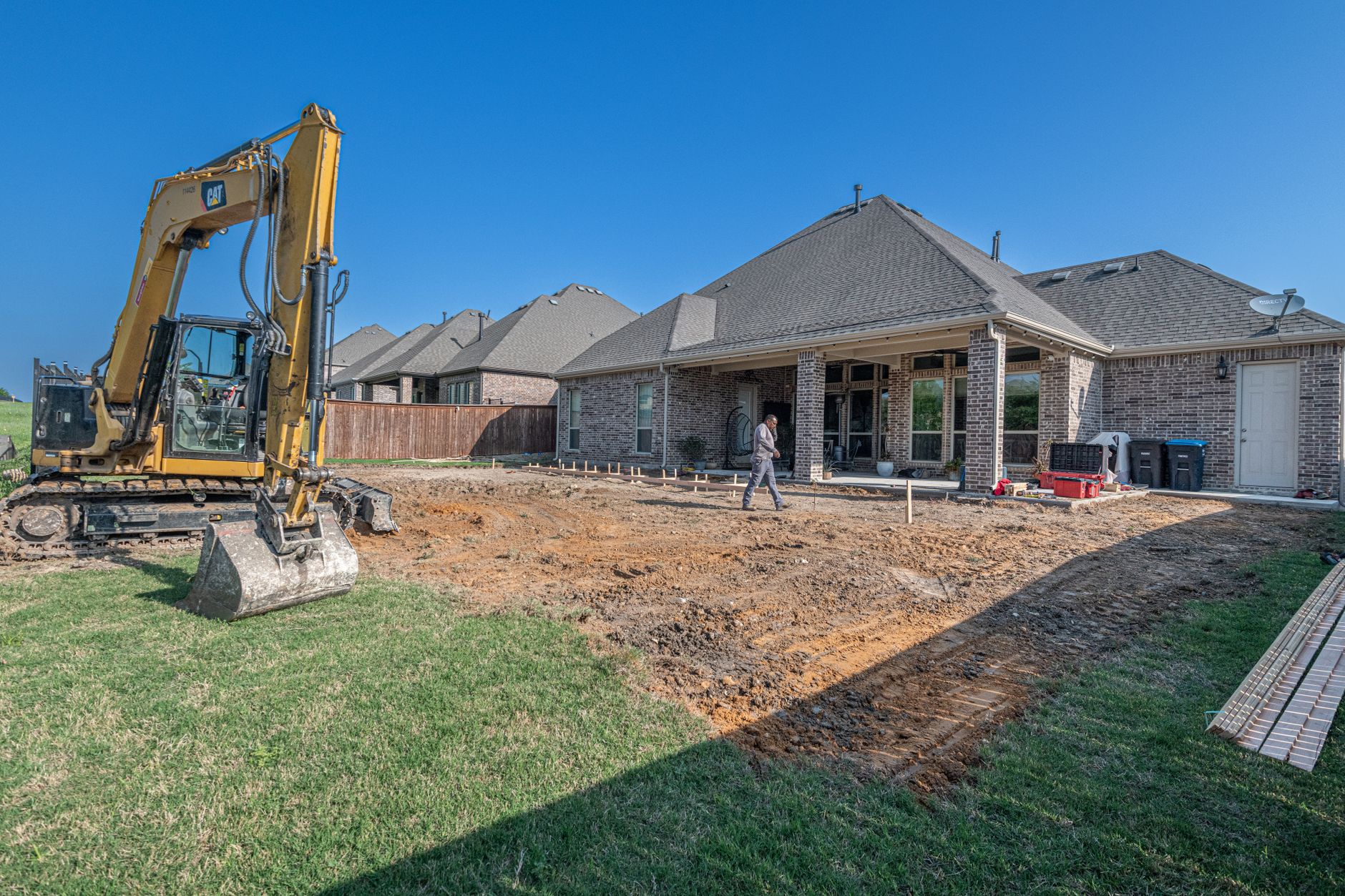
Broader rebuilding is appropriate when the base is thin, loose, saturated, contaminated, or visibly deformed across the area; when settlement follows extensive fill or excavation; or when the patio’s overall grade sends water to the wrong place. CMHA notes that base design depends on soil strength, drainage, climate, and traffic. A published minimum for ideal conditions is not a universal Lower Mainland prescription, especially on wet, weak, filled, or heavily loaded sites.
A rebuild should define excavation limits, soil condition, separation needs, base material, compacted lifts, drainage, restraint, transitions, and finished elevations before pavers return. It may reuse sound units, but reuse has practical limits when replacements are unavailable, units are brittle, or the old pattern cannot cover a changed area. The residential project overview shows how patios interact with walls, turf, planting, and other landscape elements; correcting one can change elevations and access for another.
Stop and obtain project-specific advice where settlement connects to a retaining wall, building foundation, elevated structure, pool, accessible route, unknown fill, or vehicle-bearing pavement. Those are not simply larger versions of a garden-path patch.
Restore interlock, joints, edges, and transitions together

Relaying is not complete when the last unit fits. Check the pattern against string lines, keep joints consistent, cut edge pieces properly, compact with equipment and protection suitable for the paver, and fill the joints with the specified dry material. CMHA explains that joint sand and edge restraint help the individual units act as an interlocking surface; incomplete joints or a loose perimeter undermine the repair.
Inspect every transition while the area is still workable: doors, concrete slabs, drains, steps, utility covers, lawns, beds, and adjacent paving. The surface must shed water as intended without creating an abrupt lip. Cleaning or sealer cannot correct unstable support, and pouring rigid material into moving joints often disguises rather than solves the mechanism.
- confirm finished elevations and drainage;
- seat the pavers without damaging their faces;
- fill and compact joints as the selected system requires;
- secure and back up the edge restraint;
- remove excess material and document the repaired outline.
Monitor the repair through heavy rain, not just a dry handover

Photograph the completed area from the same positions used during diagnosis. Recheck it after the first heavy rainfall and again after regular use. Look for returning ponding, joint loss, edge movement, rocking units, and a new low spot beside the repaired boundary. Early joint top-up can be routine for some systems; renewed settlement or spreading movement is not.
If the surface stays stable and drains as planned, keep it clean enough to inspect and avoid directing new roof or irrigation discharge onto the edge. If movement returns, reopen the diagnosis rather than adding another thin surface patch. The recurrence is evidence that the repaired area did not include the whole failure path.
For a patio that is difficult to read—or one involving drainage, changing grades, steps, walls, or broad settlement—ask Atkinson Landscaping to assess the site before deciding how much to lift. A smaller repair is worthwhile when the evidence supports it; a broader rebuild is cheaper than repeating a repair that never reached the cause.
References and further reading
- Concrete Masonry & Hardscapes Association: Construction of Interlocking Concrete Pavements (PAV-TEC-002)
- Concrete Masonry & Hardscapes Association: Application Guide for Interlocking Concrete Pavements (PAV-TEC-010)
- Concrete Masonry & Hardscapes Association: Proper Concrete Paver Base and Depth
- BC 1 Call: Homeowner and contractor utility-locate resources
- Atkinson Landscaping: Patio services, options, and scope factors